 Napi
Napi Külföld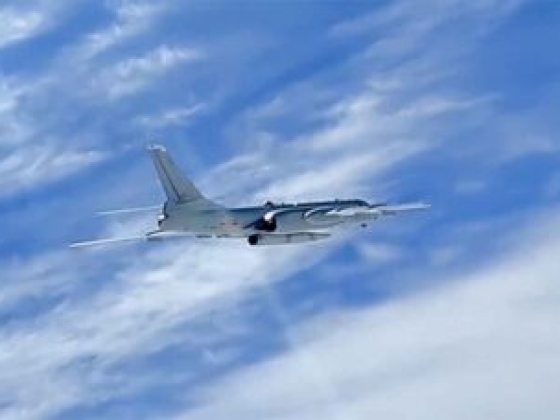

China has revealed images for the first time of the strategic H-6N bomber configured for nuclear missions, highlighting the evolution of the People’s Liberation Army Air Force’s (PLAAF) long-range strike capabilities.
The H-6N is a modernized version of the H-6 family, derived from the former Soviet Tupolev Tu-16 bomber, but featuring major improvements, including aerial refueling capability and greater operational range. The aircraft was first publicly unveiled during China’s 2019 military parade.

The new configuration allows the bomber to carry large missiles beneath the fuselage, including air-launched systems with nuclear capability. Images released previously had already shown an H-6N carrying a large weapon, identified by analysts as a possible air-launched ballistic missile equipped with a hypersonic glide vehicle.

The integration of the H-6N into the airborne nuclear component represents an important advance for China’s strategy, which seeks to expand its response capability in the event of a nuclear conflict. By employing aircraft capable of carrying nuclear weapons, alongside land-based missiles and submarines, Beijing is strengthening its so-called nuclear triad.
Although it uses a platform based on a Cold War-era design, the H-6N has received several upgrades to operate as a modern long-range strike platform. Improvements include new electronic systems, the ability to launch longer-range weapons, and the capability to conduct missions beyond the first island chain in the Pacific.
The aircraft is expected to remain one of China’s main strategic platforms until the future H-20 stealth bomber enters service. The new aircraft is being developed to further expand China’s range and power-projection capabilities.
+ JCB Hydromax reaches 592.8 km/h and breaks speed record at Bonneville
Photo and video: Open source / X @TheWarPolitics0. This content was created with the help of AI and reviewed by the editorial team.