 Egyéb
EgyébSzerző: Csaba Finta 2026. 07. 25. 2 percnyi olvasás
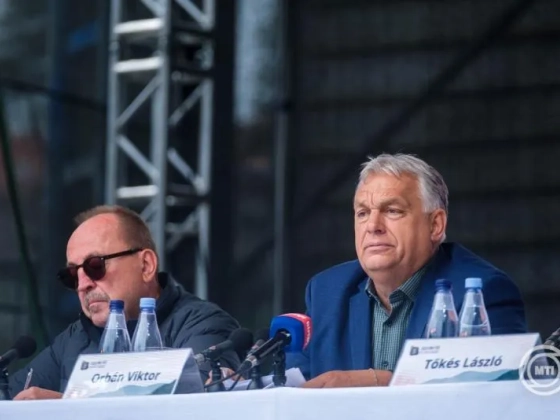
Orbán says Fidesz's fight now is about freedom, mobilisation and rebuilding a broader camp. Continue reading: https://dailynewshungary.com/orban-tusvanyos-fidesz-role-resistance/
Viktor Orbán used his address at the Bálványos Summer University in Baile Tusnad (Tusnádfürdő) to argue that Fidesz must move away from traditional opposition politics and adopt what he called “resistance politics”.
He said the party’s immediate task is no longer mainly self-criticism after defeat, but defending what he described as Hungary’s freedom. Orbán said he did not believe voters who backed change in the spring had done so in bad faith. In his telling, many had simply expected fewer government mistakes and stronger economic performance.
According to Orbán, freedom in Hungary is “not a party issue”, and Fidesz should act as a broad umbrella for everyone who values it. He said the party should not behave like a normal party organisation, but more like a “service centre” and “incubator” for freedom-minded groups and organisations.
He also said the movement should stand by its 2.5 million voters, but insisted that would not be enough on its own for a majority. He argued that the missing support would come from “political waves created by reality” and from what he called a broader coalition for freedom.
Meanwhile, Prime Minister Péter Magyar quoted Závecz Research Institute’s latest survey, which claims that the governing Tisza Party is more popular than ever, and that Fidesz’s popularity is around 19% in the latest polls, whereas at the time of April’s parliamentary election, they received the aforementioned 2.5 million votes, which was more than 38 percent.
Orbán linked the political message to economics, suggesting that the current governing side lacked solid economic foundations and would eventually lose support. He said the ratio from April, when 53 percent voted for Tisza and 47 percent against it, would reverse sooner than many expect.
He was also not afraid to use big metaphors and adjectives. In his view, a South American-style dictatorship is on the loose in Hungary, which has “become like Venezuela without oil wealth.” He referred to the Tisza-style system as “new-age communism.” But he also thinks the majority of voters are unlikely to understand this, so he is sticking with the term “autocracy.”
He also framed the coming period as one in which Fidesz should learn from its mistakes while “proudly” standing by its achievements. That combination of self-reflection and defiance is central to the new messaging he outlined in Tusványos.
The speech is significant because it shows Fidesz repositioning itself after losing power, but without adopting the language of a normal parliamentary opposition. Instead, Orbán is trying to turn political setback into a broader mobilisation narrative built around national resistance, freedom and continuity.
That approach could shape how Fidesz speaks to supporters in the coming months, especially if the party wants to keep its base while reaching beyond it.
 Napi
Napi